
What Are the Rules for Asbestos Removal in NSW?
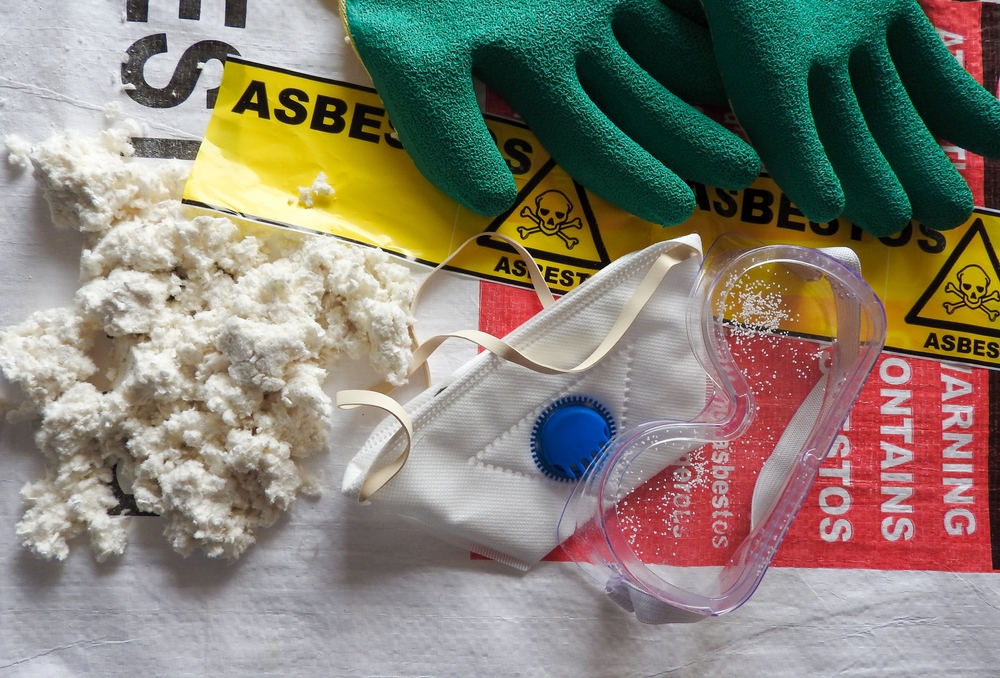
Asbestos is still found in a large number of homes, commercial buildings, and worksites across New South Wales, particularly in regional areas like Tamworth, Armidale, Glen Innes, Inverell, Moree, Narrabri, and Tenterfield. Any property built or renovated before 1990 has a real chance that asbestos-containing materials are present.
The good news is that asbestos does not always need to be removed immediately. When it is intact and undisturbed, it is generally safe. But the moment you plan to renovate, demolish, or disturb any part of an older building, the rules kick in, and you are legally required to follow them and arrange for professional asbestos removal services.
Read on to learn about the asbestos removal rules NSW, who they apply to, and what happens if they are not followed.
Why Asbestos Is Still a Problem in NSW
Asbestos was a popular material in Australian construction from the 1940s through to the late 1980s. Its use in building materials was banned in Australia on 31 December 2003, but that ban does not affect material already in existing structures.
Across the New England and North West regions, most older buildings are likely to contain asbestos in some form.
When asbestos fibres are released into the air and inhaled, they can cause serious and life-threatening diseases, including mesothelioma, asbestosis, and lung cancer. There is no safe level of asbestos exposure.
What Laws Govern Asbestos in NSW?
Asbestos regulations NSW are largely regulated by the following pieces of legislation:
SafeWork NSW is the main regulator for workplace health and safety, covering renovation, demolition, and construction work. The NSW Environment Protection Authority (EPA) governs the transport and disposal of asbestos waste.
Together, these bodies set the rules for how asbestos must be identified, managed, removed, transported, and disposed of.
What Is the Difference Between Friable and Non-Friable Asbestos?
Understanding this distinction is important because the rules differ significantly depending on which type of asbestos you are dealing with.
What Is Non-Friable (Bonded) Asbestos?
Non-friable asbestos is asbestos that is firmly bound within another material, such as fibre cement sheeting (fibro), vinyl floor tiles, or roof sheeting. In good condition, it does not readily release fibres.
- It is the most common type found in older residential properties
- It is generally less dangerous when left intact and undisturbed
- Removal is still regulated and must follow strict procedures
What Is Friable Asbestos?
Friable asbestos can be crumbled, pulverised, or reduced to powder by hand pressure. It releases fibres very easily, making it far more hazardous.
- It includes loose-fill asbestos insulation, pipe lagging, and sprayed-on coatings
- It must always be removed by a Class A licensed asbestos removalist NSW
- It can never be removed by a homeowner or unlicensed tradesperson
The 10 Square Metre Rule: What Can You Do Yourself?
In NSW, homeowners may remove up to 10 square metres of non-friable asbestos from their own house without a licence. This is commonly referred to as the 10-square-metre rule.
However, there are strict conditions attached:
- The material must be wetted thoroughly before and during removal to suppress dust
- You must not cut, drill, break, or use power tools on the material
- The removed material must be double-wrapped in 200-micron heavy-duty plastic
- Packaging must be clearly labelled with asbestos warning signs
- Waste must be taken directly to a facility licensed to receive asbestos
What the Rule Does Not Allow
The 10-square-metre limit is cumulative, not per job. Removing 5 square metres in one month and another 6 square metres the following month means you have exceeded the legal threshold.
You cannot:
- Remove any amount of friable asbestos yourself
- Hire an unlicensed person to do the removal for you
- Dispose of asbestos in a standard household skip or rubbish bin
- Carry out the work in a way that could expose neighbours or bystanders to fibres
Who Needs a Licence to Remove Asbestos in NSW?
Any asbestos removal work beyond the 10-square-metre DIY threshold must be carried out by a licensed contractor. NSW uses a two-tier licensing system:
Class A Asbestos Removal Licence
A Class A licence is the highest classification. Holders are authorised to remove:
- All types of friable asbestos and asbestos-contaminated dust
- All types of non-friable asbestos
- Any volume of asbestos-containing material
Class A work requires the most stringent safety management systems, specialised equipment, and air monitoring procedures.
Class B Asbestos Removal Licence
A Class B licence authorises the removal of non-friable asbestos only, in quantities greater than 10 square metres.
- Class B holders cannot touch friable asbestos under any circumstances
- They must still follow all safety and disposal procedures under the Code of Practice
- Always verify a contractor’s licence number on the SafeWork NSW licence verification portal before work begins
Do You Need to Notify SafeWork NSW?
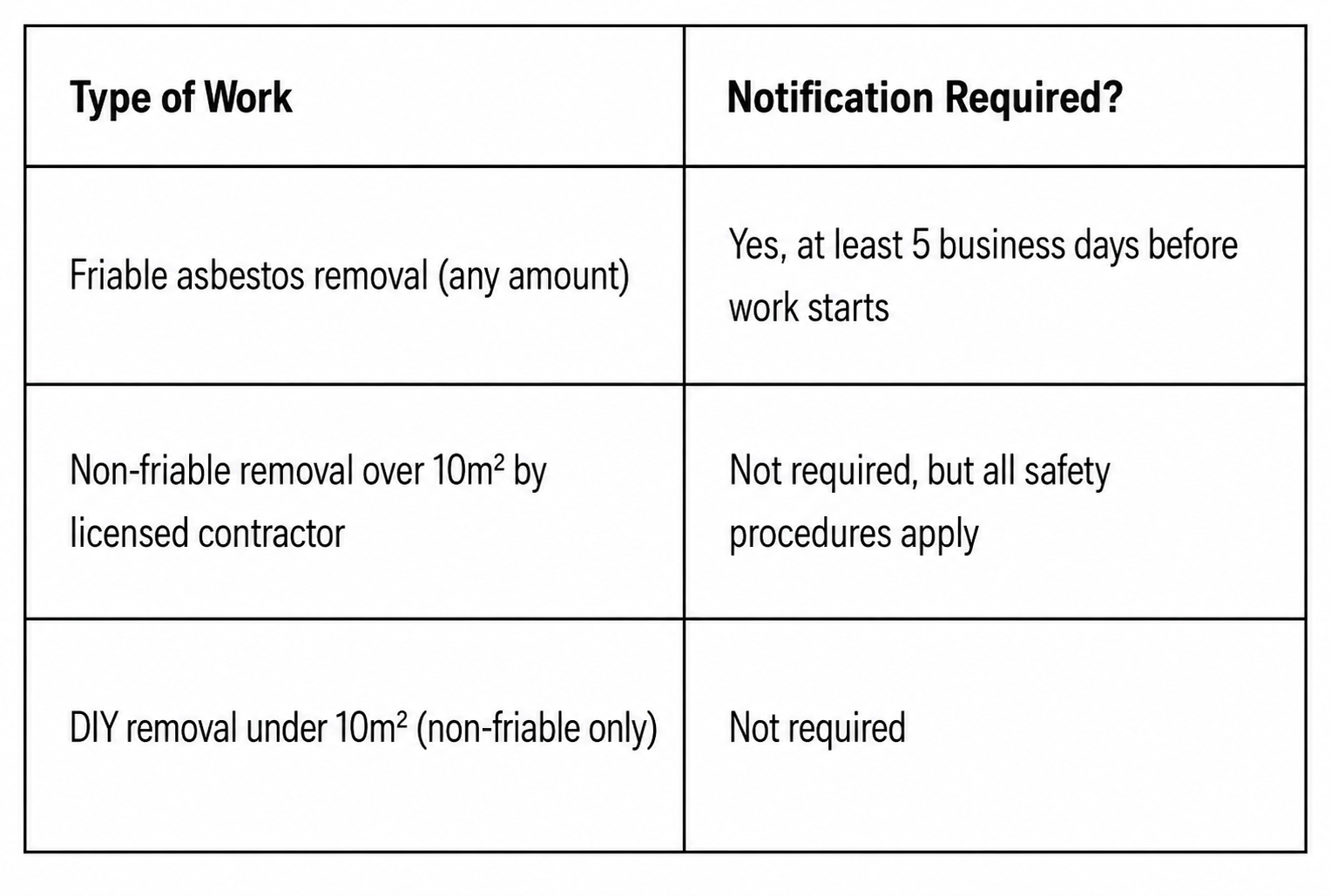
Notification requirements depend on the type and scale of the removal work:
How Must Asbestos Waste Be Disposed of in NSW?
Disposing of asbestos waste is governed by the Protection of the Environment Operations Act 1997. Illegal dumping carries serious penalties.
All asbestos waste must be:
- Sealed and labelled with asbestos warning signs
- Taken to an accredited waste facility
You cannot place asbestos waste in a domestic rubbish bin, a standard demolition skip, or any general waste receptacle. Under environmental protection laws, polluting the environment with asbestos waste is a specific offence.
Contact your local council in Tamworth, Armidale, Inverell, Glen Innes, Moree, Narrabri, or Tenterfield if you need assistance locating a licensed disposal facility in your area.
What Is an Asbestos Management Plan?
An asbestos management plan (AMP) is a documented plan that records the location, type, and condition of asbestos in a building, and outlines how it will be managed over time.
When Is an Asbestos Management Plan Required?
In NSW, any workplace where asbestos is identified or assumed to be present must have an asbestos management plan in place.
This applies to:
- Commercial buildings
- Industrial premises
- Retail and office properties
- Strata and multi-tenancy buildings
- Any site where workers may be at risk of exposure
The plan must be reviewed every five years, or earlier if the asbestos register changes or an incident occurs.
What Are the Penalties for Breaking Asbestos Laws in NSW?
The penalties for non-compliance with asbestos regulations NSW are significant:
- SafeWork NSW can issue improvement notices, prohibition notices, and on-the-spot fines
- Category 1 offences under the WHS Act carry maximum penalties of $3 million for corporations and $600,000 or five years’ imprisonment for individuals
- Illegal dumping of asbestos under the Protection of the Environment Operations Act can result in fines exceeding $1 million for individuals and $5 million for corporations
- The EPA actively investigates and prosecutes illegal dumping across regional NSW
Ignorance of the rules is not accepted as a legal defence. If work is carried out improperly, the property owner, the contractor, and any person who directed the work can all face liability.
Frequently Asked Questions About Asbestos Rules in NSW
Can I remove asbestos myself in NSW?
Yes, but only under specific conditions. Homeowners may remove up to 10 square metres of non-friable (bonded) asbestos from their own residential property without a licence. Friable asbestos must always be removed by a Class A licensed contractor.
How do I know if my property contains asbestos?
Any property built or renovated before 1990 is likely to contain asbestos-containing materials. A professional asbestos inspection by a licensed assessor is the only reliable way to confirm the presence and condition.
What is the difference between a Class A and Class B asbestos licence in NSW?
A Class A licence authorises the removal of all types of asbestos, including friable. A Class B licence covers non-friable asbestos removal only, in quantities greater than 10 square metres.
Does asbestos removal require council approval in NSW?
Not always. However, if the removal is part of a larger demolition or renovation that requires development consent, the council may impose asbestos-related conditions as part of that approval.
Where can I dispose of asbestos waste in regional NSW?
Asbestos waste must go to a facility licensed to receive it. Contact your local council in Tamworth, Armidale, Inverell, Glen Innes, Moree, Narrabri, or Tenterfield for guidance on the nearest licensed disposal site.
Need Licensed Asbestos Removal in Tamworth or the New England Region?
Tamworth City Demolition is a locally owned and operated business servicing Tamworth, Armidale, Glen Innes, Inverell, Moree, Narrabri, Tenterfield, and surrounding communities across the New England and North West regions of NSW.
Our team handles all aspects of licensed asbestos removal, from initial assessment through to safe disposal and clearance certification, making sure every job meets SafeWork NSW requirements and protects the health of your family, workers, and neighbours.
To find out more or to get a quote, visit our asbestos removal page or give us a call. We are here to help, no complicated processes, no surprises.
